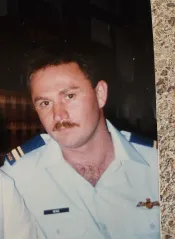
As the Museum’s head of curation and vice‐president of exhibitions, Matthew Cutler played a lead role in staging our exhibition about Canada’s LGBT Purge. But it was only recently he discovered a personal connection to this story of human rights abuses and activism – a connection that shed light on his own life experience.
This piece is excerpted from the catalogue for Love in a Dangerous Time: Canada’s LGBT Purge, which contains reflections and stories on queer history and activism. Order your copy of the exhibition catalogue today.
The past 20 years of my life have been dedicated to the rights and recognition of 2SLGBTQ+ people across Canada and globally. I’ve had the privilege to work alongside friends and accomplices to lead parades, create organizations, make multi‐sport games more inclusive, foster welcoming workplaces, and build spaces where queer and trans people can thrive. Yet it wasn’t until recently that I learned about a deeper connection to this movement – a connection that profoundly shapes my own story.
Capt. Joshua Birch – my mother’s cousin – won a landmark case in the fight for 2SLGBTQ+ rights when, in 1992, the Ontario Court of Appeal ruled that discrimination based on sexual orientation was illegal under Canadian law. The victory in Haig and Birch v. Canada was bittersweet, however, for those who knew and loved Joshua – shortly after the case, he died by suicide.
Learning about Joshua and talking openly about his life for the first time added new layers to my understanding of why my family feared for me when I came out: they had witnessed the impact of systemic discrimination firsthand, and this fear shaped their response to my life and identity.
Joshua’s story is just one of many little‐known histories woven into the exhibition Love in a Dangerous Time: Canada’s LGBT Purge, and into the fabric of Canada’s 2SLGBTQ+ communities. From the 1950s to the 1990s, thousands of people like Joshua were systematically discriminated against, interrogated and dismissed from public service simply for being who they were. For decades, many of these stories were silenced or disregarded as unfortunate but isolated incidents. In uncovering these hidden pasts, we not only honour those who came before us, but we also equip ourselves – and our society – with the knowledge and empathy needed to create a more just and inclusive future.
For some, the Purge may be a revelation, an uncomfortable reminder that Canada, too, has its share of dark chapters. For others, it may stir personal memories – connections to people they knew or loved who endured discrimination. The act of uncovering these stories is a form of justice, as it enables us to see clearly and begin to repair the damage done.
This exhibition owes its existence to the resilience of the LGBT Purge survivors. When the survivors won their class action suit against the Government of Canada in 2018, a portion of the $145 million settlement was dedicated to bringing their stories to light. But while funds can make an exhibition possible, it is the deep relationships and trust forged between survivors and the Museum that made it meaningful.
The survivors’ vision for this exhibition has been central to shaping its content, ensuring that it honours both the pain and the perseverance of those affected. We are proud to stand beside them as partners, allies and friends in telling their stories.
Matthew Cutler
Head of Curation and Vice‐President, Exhibitions